

From Akron to the Internet a Time Line of AA Communication
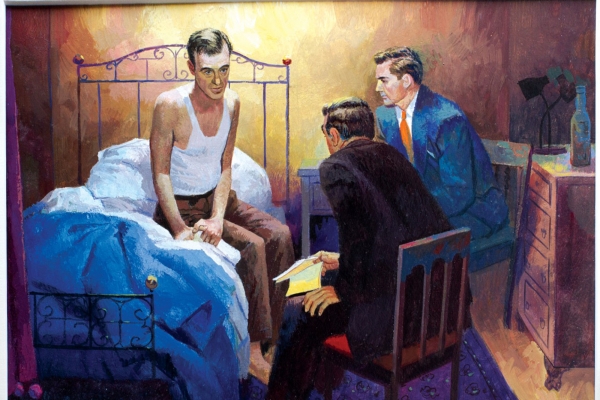
The ways AAs carry the message have changed over the years. The message hasn't. 1935: Bill W. Dr. Bob meet f2f. 1939: The Big Book is published, carrying the message in print. 1939: First public service message about the Big Book appears in a New York Times ad, "Have You an Alcoholic Problem?" 1941: NBC begin 13-part syndicated radio program called Is Alcohol a Problem in Your Home? 1941: Saturday Evening Post publishes Jack Alexander's article about AA. 1944: The AA Grapevine begins monthly publication. 1945: Paramount Pictures releases the movie The Lost Weekend, based on the novel by Charles Jackson. 1946: Marty Mann explains alcoholism AA on the radio show We The People. 1947: First transatlantic telephone call is received by Alcoholic Foundation from an Army hospital in Germany. 1948: An AA member explains principles of the program on Hi, Jinx, a morning radio show on WNBC. 1949: CBS radio broadcasts a 10-episode drama about on alcoholic finds AA. GSO is deluged with inquiries. 1953 HAAM, an international fellowship of AA ham radio operators, is established. 1953: Art Linkletter interviews a masked woman member of AA on his TV show. 1954 The Grapevine asks for the signals of amateur radio operators who would like to communicate via the airwaves. 1956: An all-AA TV program, Mr. Hope, an actual closed meeting of masked AA members, debuts in Detroit. AA HQ in Detroit is beset by telephone calls and letters from people wanting more information. 1956: Bill W. and Eve M. from general service are anonymous guests on the popular radio show Martha Deane on WOR. 1960 Broadcast of a radio show Alcoholism The Problem and the Hope, featuring Marty Mann and a GSO staff member. 1962: The Betty Furness radio program features a show on international AA. 1963: The movie Days of Wine and Roses is previewed by GSO staffers before its release. 1963: WNBC begins broadcasting an AA radio program called Ask an Alcoholic. 1966: AA creates a 60-second TV spot for distribution by public information committees. 1966: Five groups in states hold the first telephone conference-call meeting. 1970: KUAT in Tucson, AZ, launches AA-of-the-Air, a radio show for homebound AAs. 1973: David Suskind interviews 5 women AAs on his TV show. 1976: Members of AA, Al-Anon, and Alateen are interviewed on the John Gentry Radio Show on WGCH in Greenwich, CT. 1979: The 29th General Service Conference views and approves Alcoholics Anonymous--An Inside View, a 28-minute color film produced by AA. 1980s: First AA bulletin boards, online meetings, and chat rooms appear. 1986: Q-Link, one of the first online AA groups, begins meeting, growing to 200 members nationwide in two years. 1988: GSO begins compiling a list of online AA groups. 1989: ABC-TV broadcasts My Name is Bill W. 1990s: TDD (text telephone) technology helps hard-of-hearing AAs talk with other AAs. 1990: Kansas Area public information establishes AA Message of the Day, a telephone service featuring daily readings from the "Twelve and Twelve." 1990: Connecticut's public radio show, Open Air New England, puts open AA meetings on the air. 1992: Thirteen 1-hour AA meetings airing times a week are broadcast on cable TV stations in Portland, OR. 1995: Online Intergroup of Alcoholics Anonymous (OIAA) is established. 2002: The Queensland Young People in AA Convention is netcast worldwide from Australia. 2002: Online AA reps meet, hoping to establish a service conference for AA in cyberspace.
Need help with customer service?
Call 800 631-6025 (English), 800 640-8781 (Spanish), 212-870-3456 (French) or email: [email protected]
or [email protected]