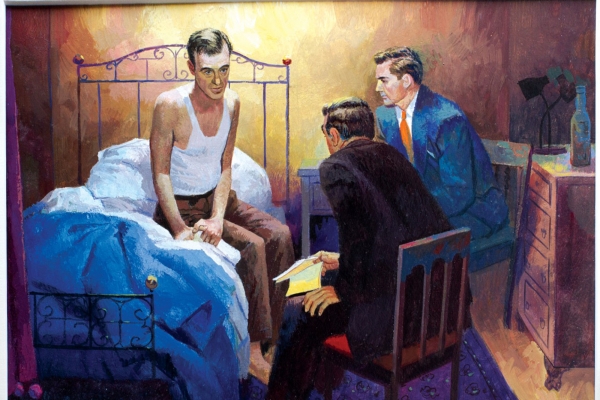


Alcoholism At Large
Alcohol can initiallY HAVE SLEEP-INDUCING effects among non-alcoholics, but once drinking becomes chronic, alcohol's effects on sleep become much more negative in nature. New findings indicate that individuals in early recovery from alcoholism who have inaccurate sleep perceptions are more likely to return to drinking. "The usual perception of alcohol's effects on sleep in nonalcoholics is that it helps sleep," explained Deirdre A. Conroy, the corresponding author who conducted the research while a postdoctoral fellow at the University of Michigan. "In truth, alcohol may help people fall asleep but it usually leads to poor quality sleep in the second half of the night and overall less deep sleep. As people drink more regularly across nights to fall asleep, they become tolerant to the sedating effects of alcohol and subsequently use more alcohol each night to help fall asleep." Conroy and her colleagues examined 18 individuals with insomnia (9 males, 9 females) who were also in early recovery from alcohol dependence. "Our study suggests that in early recovery from alcoholism, people perceived that it took them a long time to fall asleep and that they slept through the night," said Conroy. "The reality was that it did not take them as long to fall asleep as they thought it did, and their brain was awake for a large portion of the night. On average, the participants that were less accurate about how they were sleeping were more likely to return to drinking."
Need help with customer service?
Call 800 631-6025 (English), 800 640-8781 (Spanish), 212-870-3456 (French) or email: [email protected]
or [email protected]